

Hour Thirteen
Reflections of a Nursing Student in Acute Care

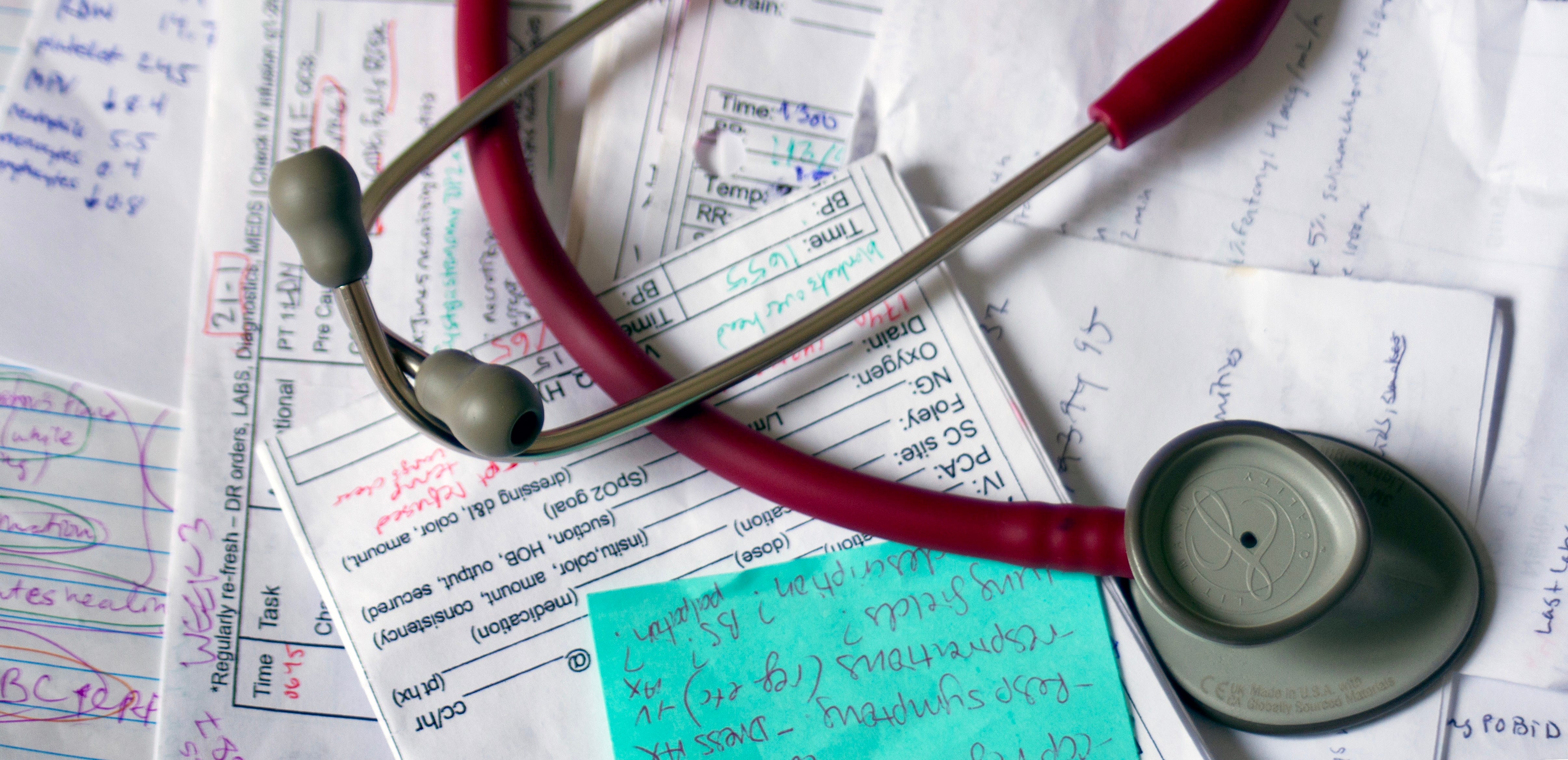
I look over at A, her eyes are watering, and she avoids my gaze, glancing downward as she blows on her noodles, still too hot to eat. Her primary nurse has been giving her a hard time this morning. It’s already been a long day and we’re only two-thirds of the way through a twelve-hour shift. Her voice cracks as she talks. A goes red, I curl my toes in my shoes, hold my breath and dig my fingernails into my palms to stop myself from crying. This will happen three times today before I eventually bend over, hands on my knees and finally break down: hour thirteen.
We’ve prepared for this rotation by practicing simulation scenarios on manikins, and on each other. I’ve met Sonny Lee, Marcy Banks, Natalia Rychinski, Chad Karsten, and Raj Sidhu many times. Day two at St. Paul’s Hospital, I meet a former VCC student who asks me who my Integration case was. “Sonny Lee,” I said. “I remember him,” he replied. “I remember all of them.”
We’ve been told for the past year that we have to switch our mindset from care aide to nurse. On the unit, I’ve made beds and I’ve changed pads. I’ve turned patients, washed faces, brought blankets and ice. I’ve given a full bed bath and changed an occupied bed covered in poop. Every clinical rotation that I have, I think about the generic practical nurse students. I’m so glad that I can bathe, dress and change a patient without batting an eye. It’s second nature. It’s a reminder that my hard work and attention to detail will bring me the confidence and tenacity that I am longing for as a nurse.
I ask J how long this will take. “Two years working as a nurse.” Oh. My. God. I’m still not deterred. I want it. I have big plans. Life plans. Ideas swirling around in my head about what care means and how to help people. I think about practice, about policy. I think about shared humanity and storytelling. I think about art, but in a social context. But first. HOW TO BE A DAMN LPN.
I look at wounds and light switches go on: redness, edema, ecchymosis, drainage, approximation. I watch my patients breathe and listen to their lungs and understand why. I do a secret, internal happy dance when my pre and post assessments connect literal dots. There is an odd, morbid satisfaction that I keep to myself.
Compartmentalize. Prioritize. Shake it off. How to choose? There are many layers of distractions. I think my spine is compressed one millimeter per shift. I am getting shorter by the day. S makes me laugh. P makes me roll my eyes. A makes me cry. J makes me mad. Other J is an enigma, but I love that. I don’t care who reads this. This is for me. You can laugh and get mad too. Work culture is so… ugh. School is grueling and I don’t subscribe to hierarchy. Right now, I feel like I am jumping through hoops. They are painful and weird.
How strange it is to walk around in this body. That’s not a statement of gratitude. You’d think that would be the case amongst patients who are bedbound, or recovering from procedures that may send them home with permanent disabilities. Some of these folks are gravely ill and will transfer to the ICU. It’s probably more of a sentiment teetering on existential crisis. I hate this. I honestly hate this.
I love: collecting data, interacting with my patients, talking to their family members, wound care and every procedure that I can get my hands on.
I hate: feeling like a constant failure, being berated, falling behind, not meeting my own expectations, observing cruelty, waiting in limbo (for report, for my instructor, for equipment, for my primary nurse… any kind of waiting when I want to get things done).
Sometimes inflicting pain is part of the process. What I’ve learned in my current job as a Community HCA that I know will continue to get me into trouble as an LPN: when I see myself in other people, I break down. This is why A makes me cry, and why when J started to tear up one day, I did as well.
I’ve had two experiences in my job as a Community Health Worker where I needed to do some work to resolve the residual pain. Why? Because observing the acuity of grief in other people reminds me of my own trauma and tragedy. People die, their family members suffer, and we bear witness as healthcare workers. I know this will happen again. And again. Something tells me that this will serve a purpose, but also needs to be continually monitored. q monthly. q weekly? q72h?
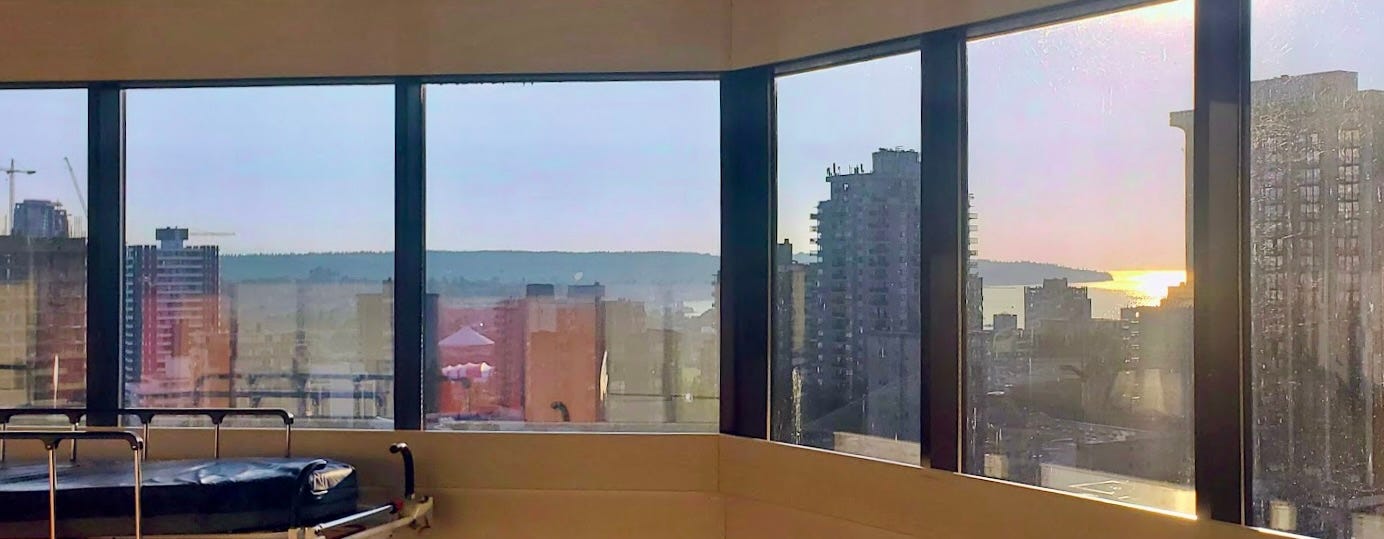
Does it bother me that my dementia patient is screaming and crying while we insert the foley? Yes. That old lady backhanded me across the face. Do I take it home with me? No. Does it bother me that my patient is furious and yelling at me because he is in pain early in the morning? Yes. Will I take it home with me? No. Does it bother me that my patient is possibly dying because of respiratory failure? Yes. Will I take it home with me? A little bit. Will it stay with me? No. I feel A’s pain because I understand A’s pain. I have that same pain.
During post conference, J tells us about driving home from clinical when she was a student and how she cried in the car. “I’m welling up now as I talk about it.” I well up too and look away so no one sees my red face. I want to hear more of these things. This unit feels void of humanity. The acute setting is rigid and the more care and compassion that I give my patients, the more I fall behind.
I use my agency when I can, but sometimes I feel publicly shamed, dignity in the trash, often for the smallest of things. Who is this for? The scolding? It’s not for me. It’s a symptom of a tired culture. There have been instances in this clinical rotation that feel adverse to learning. Do I take these feelings home with me? Yes. Will it stick with me? Probably. Do I think I am smart, capable, safe—all the things? Yes. Do I hang on to the positives? I try.
Two students have struggled with pt BR. He refuses meds and won’t interact with them. J warns me that you have to start with the important meds and he might refuse. This morning, BR is happy, pleasantly confused. He takes all of his meds. They are bitter, but I give him small sips of nectar-thick cranberry juice in between spoonfuls of crushed tablets in applesauce. I hold his hand while he takes his time to swallow. I’ve already washed his face and hands with warm water. I am smiling and he smiles with me. I bring him heated blankets throughout the shift because he is always cold.
The process of pre-checks, checks, pouring, crushing, mixing, and administering approximately ten to fifteen medications for my dysphagic, cognitively impaired patient probably took half an hour as a student. That is far too long in acute care. An abomination. I beat myself up.
I am diligent with my VS. He tells me he is SOB when I ask. “Yes.” This is the only time I ever hear him say a real word. I auscultate: clear, no adventitious sounds; watch his chest, count, reposition. His SpO₂ is 100%. I rarely see this. I double check. It’s actually amazing. His skin color is appropriate for his ethnicity. I pat my hands along his upper extremities. Then the lower: his legs and feet are warm. Equal bilaterally. I tell myself his circulation is good. But I never checked his pedal pulses.
He is passing gas, no nausea. He had a BM. I changed his pad with S so that we could barrel roll him. But I didn’t auscultate his abdomen today. J tells me that I gave unsafe care. Thirteen hours, two rushed half-hour breaks. I cry on the way home.
As your Biography from artist to nurse in practice says. Artist you will always be in the art of dealing with lives and people. The important thing is for you to be happy, feel good and enjoy what you do. The rest God provides!
OPoet@LuízKon'Z
It is a great honor to be meeting a health priestess, you have the gift that God gives to few people "love for others", this is not for everyone! May God bless you with a lot of health and peace to continue doing this beautiful work and full of love. Congratulations 👏🏽 👏🏽 👏🏽 I love people like that, because I am like that! A big hug 🤗 🌹